LDD1030 Laser Diode Driver
In stockA 10 A laser driver for diode loads requiring up to 30 V compliance.
CW / QCW operation
- Output current
- 10 A
- Compliance voltage
- 30 V
- Electrical output
- 300 W
$249 USD
View LDD1030Compact OEM drivers for CW and pulsed operation. Models up to 16 A and 100 V.
ephotonics offers high-power laser diode drivers for continuous-wave (CW) and pulsed operation in industrial and scientific laser systems. Choose from models with maximum output currents of 10 A or 16 A and compliance voltage ratings of 30 V, 60 V or 100 V. With a compact 74 × 63 × 26 mm form factor, these laser drivers are designed for OEM integration into space-constrained equipment. Compare each model's current, voltage and modulation specifications to select a driver for your laser diode and application requirements.
Explore five LDD Series models, ordered by electrical output from 300 W to 1.6 kW, plus the TKLM-DT with integrated TEC control. Compare output current, compliance voltage and temperature-control capabilities for your application.
A 10 A laser driver for diode loads requiring up to 30 V compliance.
CW / QCW operation
$249 USD
View LDD1030 →
A higher-current 16 A option for diode loads requiring up to 30 V compliance.
CW / QCW operation
$279 USD
View LDD1630 →
A 10 A driver with up to 60 V compliance for higher-voltage diode loads.
CW / QCW operation
$299 USD
View LDD1060 →
Combines 16 A output current with up to 60 V compliance for demanding OEM laser systems.
CW / QCW operation
$329 USD
View LDD1660 →
The highest-voltage LDD model in this range, with up to 16 A output current and 100 V compliance.
CW / QCW operation
$399 USD
View LDD16100 →
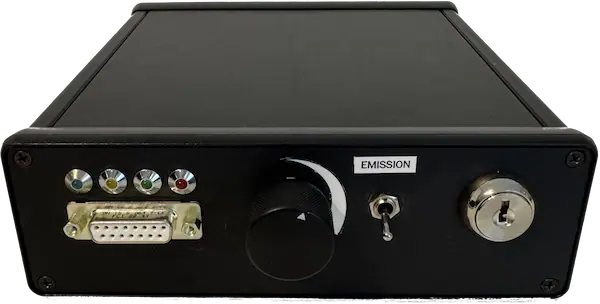
Combined laser current and TEC temperature control, configured for your diode and application.
Integrated TEC · Analog / TTL · USB control
Price and lead time
on quotation.
Ratings shown indicate upper operating limits. Electrical output refers to power delivered to the laser diode, not optical power. See each model’s specifications for operating conditions, input supply and cooling requirements. LDD enclosure: 74 × 63 × 26 mm; TKLM-DT enclosure: approximately 165 × 160 × 51 mm. LDD images illustrate the series enclosure. * TKLM-DT laser output voltage depends on the selected configuration.
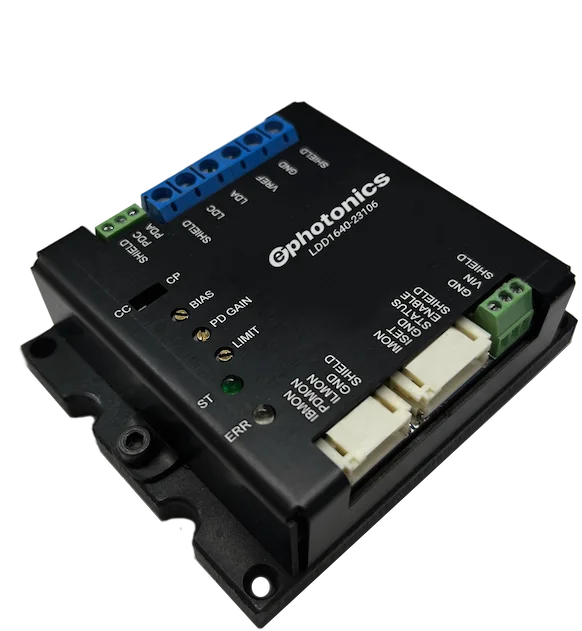
Need a laser diode driver outside our standard LDD range? ePhotonics develops custom high-power laser drivers for OEM, industrial, and scientific systems. We can adapt the current range, compliance voltage, form factor, modulation, protection, thermal management, and control interface to your application.
Start with your laser diode's operating current and forward voltage. Match those requirements to the driver's current range and compliance voltage, then check modulation timing, control interfaces, power-supply requirements and cooling. If your system also needs active diode temperature regulation, consider a laser diode driver with TEC control.
The LDD series includes models with maximum current ratings of 10 A or 16 A and maximum compliance voltage ratings of 30 V, 60 V or 100 V, depending on the model. These are maximum ratings; see each model's specifications for its current adjustment range. LDD1630 and LDD1660 are coming soon. The TKLM-DT has separate, configuration-dependent specifications.
Compliance voltage is the maximum output voltage available while the driver regulates current. It must cover the diode's forward voltage and wiring losses. Check input-supply requirements separately. Our laser diode driver compliance voltage calculator helps estimate the voltage needed by your diode and cables.
Continuous-wave (CW) operation drives the laser diode continuously. Pulsed operation controls the drive current over defined time intervals. The LDD series supports CW and pulsed operation. For pulse applications, check the selected model's rise and fall times, supported pulse widths, repetition rate and duty-cycle limits against your requirements.
Constant-current (CC) control regulates the current through the laser diode. Constant-power (CP) control adjusts that current using optical feedback, such as a compatible monitor photodiode signal. CP operation requires a suitable feedback arrangement. Confirm the supported control modes and feedback connections for your selected driver.
Yes. The TKLM-DT laser diode driver with TEC controller combines laser current control with thermoelectric temperature control. Configurations support up to 16 A laser current, up to 24 V laser output and up to ±15 A TEC current. Maximum laser output voltage depends on the selected configuration. Pricing and lead time are confirmed with a quotation.
The LDD series measures 74 × 63 × 26 mm and is designed for OEM integration. The TKLM-DT measures approximately 165 × 160 × 51 mm and includes TEC control. Allow for connector access, mounting and the cooling arrangements required by your selected model.
Protection features depend on the model. For example, the LDD1060 laser diode driver includes an adjustable current limit and reverse-current protection. The TKLM-DT offers soft start, reverse-polarity and transient protection, and a remote interlock. Follow the selected model's documentation for protection behavior and connection requirements.
The wattage listed for the LDD series describes electrical output delivered to the laser diode. Laser optical output depends on the diode's characteristics, efficiency and operating conditions. Driver conversion efficiency describes the relationship between its electrical input and output power. Use the individual driver and diode specifications when calculating electrical load, optical output and heat dissipation.
Use a DC supply that meets the selected driver's input-voltage and input-current requirements at your intended output load. Provide cooling for both the driver and the laser diode according to their operating conditions. Check the model documentation for supply, wiring and thermal requirements.
Yes. ephotonics offers custom laser diode driver design for application-specific current, voltage, mechanical and control-interface requirements. Share your diode specifications, operating mode, integration constraints and required quantity so we can assess a suitable solution.