
ephotonics product
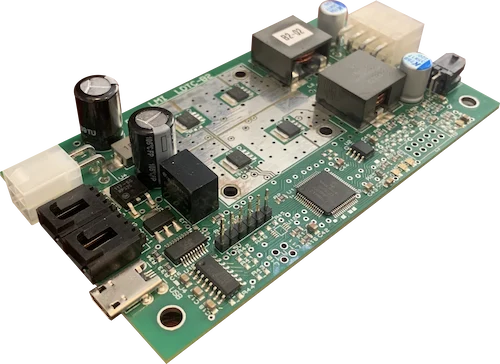
TCW-1525 TEC Controller
Control the temperature you just calculated
ephotonics
linkedin.com/company/ephotonics
Follow our page for weekly laser engineering guides, photonics tutorials, and new calculator releases directly in your feed.
Follow on LinkedInHow to Calculate TEC Thermal Load
To correctly size a Thermoelectric Cooler (TEC or Peltier module) for a laser diode or optical component, you must calculate the Total Heat Load (Qc). This is the sum of the heat actively generated by your device and the ambient heat passively leaking into your system.
Qactive = (Vop × Iop) − Pout
Active Load (Device Waste Heat)Qpassive = h × A × ΔT
Passive Load (Thermal Leakage)Qc = Qactive + Qpassive
Total Required Cooling Capacity (Watts)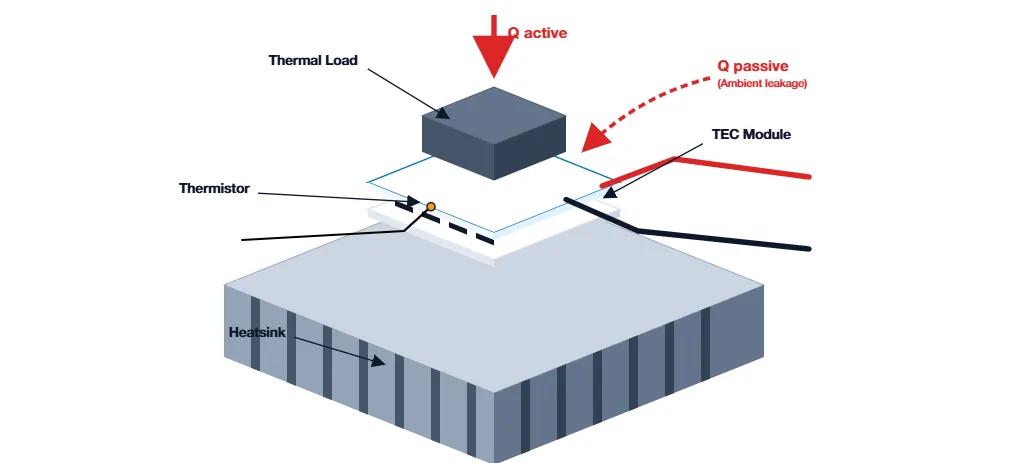
Understanding the Variables
- Vop & Iop Electrical Input: The operating voltage and current driving the laser diode.
- Pout Optical Output: The useful optical power emitted by the laser. This energy leaves the system and does not need to be cooled.
- h Convection Coefficient: The rate of thermal transfer between the cold plate and the environment.
- A Surface Area: The total exposed area of the cooled components.
- ΔT Temperature Gradient (Th − Tc): The difference between the hot ambient environment and your target cold temperature.
TEC Efficiency (COP)
Remember that TECs are inefficient (typically operating at a COP of ~0.5). If your calculated total load (Qc) is 10W, your TEC will likely consume roughly 20W of electrical power to move that heat.
View TEC Controllers